| Citation: | Zhiyuan Du, Kexin Wang, Zijia Liu, Yifei Wang, Bosi Sun, Yu Wang, Chenchen Yin, Tianjiao Zhao, Dan Yin, Ajiao Yu, Weijun Li, Yang Qu, Yu Liu, Lei Wang, Lei Jiao, Baofeng Yang. Therapeutic effects of Naoshuan Kangfu Capsule on post-stroke spasticity in normothermic and cold-exposed rat models[J]. Frigid Zone Medicine, 2026, 6(3): 150-165. doi: 10.1515/fzm-2026-0016

|

| [1] |
Saini V, Guada L, Yavagal D R. Global epidemiology of stroke and access to acute ischemic stroke interventions. Neurology, 2021; 97(20 Suppl 2): S6-S16.
|
| [2] |
Fladt J, Ospel J M, Singh N, et al. Optimizing patient-centered stroke care and research in the prehospital setting. Stroke, 2023; 54(9): 2453-2460. doi: 10.1161/STROKEAHA.123.044169
|
| [3] |
Wissel J, Manack A, Brainin M. Toward an epidemiology of poststroke spasticity. Neurology, 2013; 80: S13-S19. doi: 10.1212/WNL.0b013e318279755f
|
| [4] |
Li S, Francisco G E. New insights into the pathophysiology of poststroke spasticity. Front Hum Neurosci, 2015; 9: 192.
|
| [5] |
Sun X, Cai J, Zhang A, et al. Electroacupuncture pretreatment alleviates post-stroke spasticity in rats by inhibiting NF-κB/NLRP3 signaling pathway-mediated inflammation and neuronal apoptosis. Nan Fang Yi Ke Da Xue Xue Bao, 2024; 44: 2102-2109.
|
| [6] |
Nguyen J N, Mohan E C, Pandya G, et al. CD13 facilitates immune cell migration and aggravates acute injury but promotes chronic poststroke recovery. J Neuroinflammation, 2023; 20: 232. doi: 10.1186/s12974-023-02918-3
|
| [7] |
Flores A E, Pascotini E T, Kegler A, et al. Worst spasticity in patients post-stroke associated with MNSOD ALA16VAL polymorphism and interleukin-1β. Gene, 2022; 847: 146880. doi: 10.1016/j.gene.2022.146880
|
| [8] |
Wang J X, Fidimanantsoa O L, Ma L X. New insights into acupuncture techniques for poststroke spasticity. Front Public Health, 2023; 11: 1155372. doi: 10.3389/fpubh.2023.1155372
|
| [9] |
Alahmad B, Khraishah H, Royé D, et al. Associations between extreme temperatures and cardiovascular cause-specific mortality: Results from 27 countries. Circulation, 2023; 147: 35-46. doi: 10.1161/CIRCULATIONAHA.122.061832
|
| [10] |
Vickneson K, Blackburn J, Gallagher J R, et al. Cold-induced dishabituation in rodents exposed to recurrent hypoglycaemia. Diabetologia, 2021; 64: 1436-1441. doi: 10.1007/s00125-021-05425-3
|
| [11] |
Shepherd A J, Mohapatra D P. Attenuation of unevoked mechanical and cold pain hypersensitivities associated with experimental neuropathy in mice by angiotensin Ⅱ type-2 receptor antagonism. Anesth Analg, 2019; 128: e84-e87. doi: 10.1213/ANE.0000000000003857
|
| [12] |
Chen Z, Liu P, Xia X, et al. The underlying mechanisms of cold exposure-induced ischemic stroke. Sci Total Environ, 2022; 834: 155514. doi: 10.1016/j.scitotenv.2022.155514
|
| [13] |
Papuć E, Rejdak K. Increased cerebrospinal fluid S100B and NSE reflect neuronal and glial damage in Parkinson's disease. Front Aging Neurosci, 2020; 12: 156. doi: 10.3389/fnagi.2020.00156
|
| [14] |
Isgrò M A, Bottoni P, Scatena R. Neuron-specific enolase as a biomarker: Biochemical and clinical aspects. Adv Exp Med Biol, 2015; 867: 125-143.
|
| [15] |
Liu J, Zhao G, Niu Y, et al. Effect of electro-acupuncture therapy on limb spasm and excitability of motor neurons in stroke rats. Zhejiang Da Xue Xue Bao Yi Xue Ban, 2021; 50: 361-368.
|
| [16] |
Zhou P, Xie W, Meng X, et al. Notoginsenoside R1 ameliorates diabetic retinopathy through PINK1-dependent activation of mitophagy. Cells, 2019; 8(3): 213. doi: 10.3390/cells8030213
|
| [17] |
Zhang L, Wei W. Anti-inflammatory and immunoregulatory effects of paeoniflorin and total glucosides of paeony. Pharmacol Ther, 2020; 207: 107452. doi: 10.1016/j.pharmthera.2019.107452
|
| [18] |
Sun L P, Shi F F, Zhang W W, et al. Antioxidant and antiinflammatory activities of safflower (Carthamus tinctorius L. ) honey extract. Foods, 2020; 9(8): 1039. doi: 10.3390/foods9081039
|
| [19] |
Haque Bhuiyan M M, Mohibbullah M, Hannan M A, et al. The neuritogenic and synaptogenic effects of the ethanolic extract of radix Puerariae in cultured rat hippocampal neurons. J Ethnopharmacol, 2015; 173: 172-182. doi: 10.1016/j.jep.2015.07.013
|
| [20] |
Wu L, Song H, Zhang C, et al. Efficacy and safety of panax notoginseng saponins in the treatment of adults with ischemic stroke in China: A randomized clinical trial. JAMA Netw Open, 2023; 6: e2317574. doi: 10.1001/jamanetworkopen.2023.17574
|
| [21] |
Lin J, Wang Q, Zhou S, et al. Tetramethylpyrazine: A review on its mechanisms and functions. Biomed Pharmacother, 2022; 150: 113005. doi: 10.1016/j.biopha.2022.113005
|
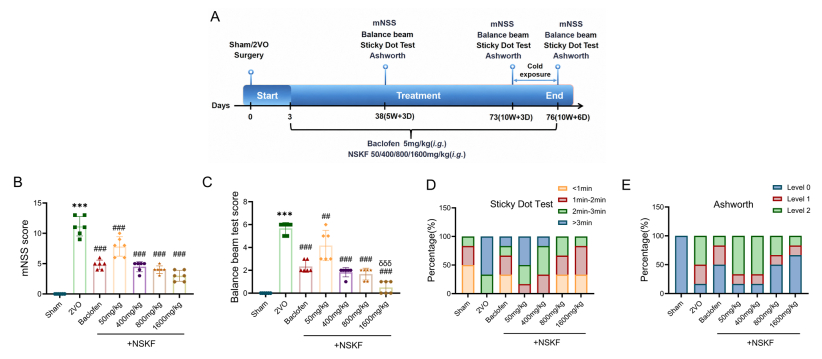
Figures(9)
Editorial Office: Frigid Zone Medicine, Editorial Office of Frigid Zone Medicine, Heilongjiang Health Development Research Center, Zhongshan Road 112, Xiangfang District, Harbin, 150036, China
Tel: 0451-87253028
E-mail: editorialoffice@frigidzonemedicine.com
Supported by:
Beijing Renhe Information Technology Co., Ltd.


 Submit


 DownLoad: